
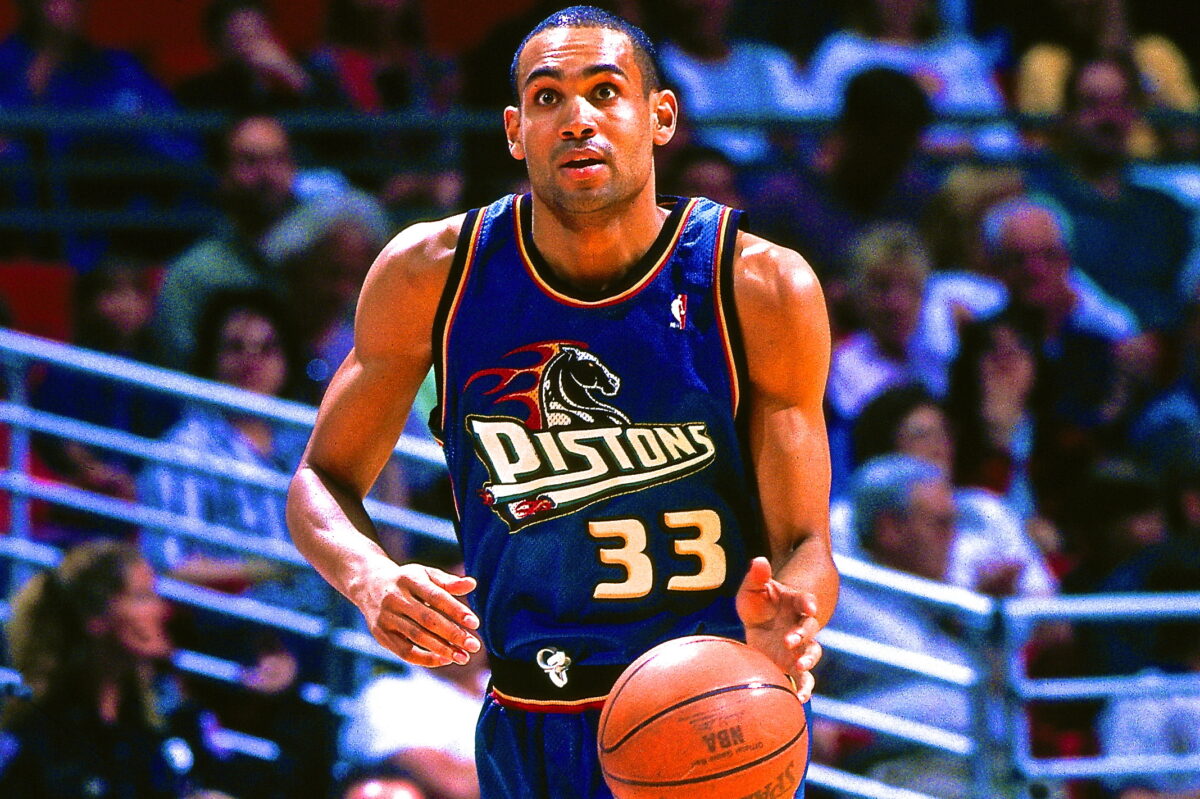
The hype surrounding Grant Hill and his potential heading into the NBA was among the highest it had been for any player in the pre-internet era. His well-rounded skill set, coupled with his athleticism and smooth demeanor on the floor led some to believe that he would be the most likely candidate to dominate the league once Michael Jordan retired.
Hill was often asked about the comparison to Jordan, but always deflected that attention as a young player. He would tell the media that he still had a long way to go to achieve anything close to what the Bulls legend had, and that only time would tell as to whether the two men could be included in the same sentence.

Grant Hill – Childhood
The story of Grant Henry Hill begins in Dallas, Texas on October 5, 1972. The location of Hill’s birth might be interesting to fans of other sports, since his father played professional American football in NFL. Calvin Hill was a running back for the Dallas Cowboys from 1969 through 1974, and was one of the better rushers in the league. He made four Pro Bowls while playing in Dallas, and it is not hard to figure out where Grant Hill’s athletic talent came from.
Grant’s mother Janet Hill was also extremely instrumental in his life growing up. While Calvin was busy carving up defenses in the NFL, Janet achieved prominent stature in the litigation and consulting worlds. Both parents were serious about Grant’s academic and athletic development, and implemented defined rules for their son.
While it may have isolated him while he was younger, the lessons that prioritized hard work would stick with Grant Hill for his entire life. The family would eventually move to Reston, Virginia, since his father would eventually play for the Washington Commanders.
When he was a kid, Hill ended up falling in love with basketball. He was obsessed with watching tape of other players so he could their moves, and figure out how he could incorporate them into his own game.
Grant Hill – High School
Because of who his father was, a lot of people knew of Grant Hill coming up in the youth national basketball scene. However, he remained humble every step of the way, knowing that his name was not going to get him to the places that he dreamed of going. Hard work, and performance against the best would prove to everyone that he deserved to play at the highest level of competition.
He would have a storied four year career at South Lakes High School. Hill was already 6’4” as a freshman, and the program knew they had something special right away. Even though he personally did not want to play varsity in his first high school season, it was eventually understood by Hill that facing an elevated level of competition would serve him well in the long run.
There really wasn’t anything the forward couldn’t do on the court. He would eventually grow to 6’8”, while out rebounding and dunking over the competition. Grant Hill’s high school coach officially started him at point guard during his senior season, to help advance his already impressive on-ball and offensive initiation skills. The sky truly was the limit for him as he would impact the game in every way imaginable.
Grant Hill – College
Duke Blue Devils head coach Mike Krzyzewski had spent the entirety of the 1980’s building up a basketball program that played second fiddle to other powerhouses in the ACC. The basketball team had made deep runs in the NCAA tournament throughout the decade, and made it to the 1990 title game before being blown out by a more athletic and talented UNLV team.
That would all change in 1990-1991 however, due in large part to the arrival of Grant Hill. His selfless play would allow Christian Laettner to remain the focal point of the roster, but he would help fill in any blanks that the team had.
In the 1991 NCAA Tournament, Duke would once again run into UNLV. This time, they were ready, as Hill was well equipped to do battle athletically with the likes of Stacey Augmon and Larry Johnson. The Blue Devils advanced past the Running Rebels in the Final Four, and defeated the University of Kansas to capture the school’s first NCAA championship.
Duke would come back even stronger during Hill’s sophomore season, posting a dominant 34-2 overall record on their way to a second consecutive NCAA title. The team also got knocked off by the University of Kentucky in the regional final, but thanks to an iconic play by Hill and Laettner, Duke’s championship dreams remained alive.
Hill threw a perfect pass to the opposite foul line, where Laettner would catch it and score the game winning basket. The Blue Devils would march on to the Final Four and then the title game, where they dismantled the Fab Five University of Michigan team led by Chris Webber and Jalen Rose.
As an upperclassman, Hill and the Blue Devils didn’t quite have the same level of team success, but almost won another title in the forward’s senior season. Leaving school early was never really a thought that entered Hill’s mind since he was focused on graduating, but a lot of fans started to wonder what he could do in professional basketball during his junior season.
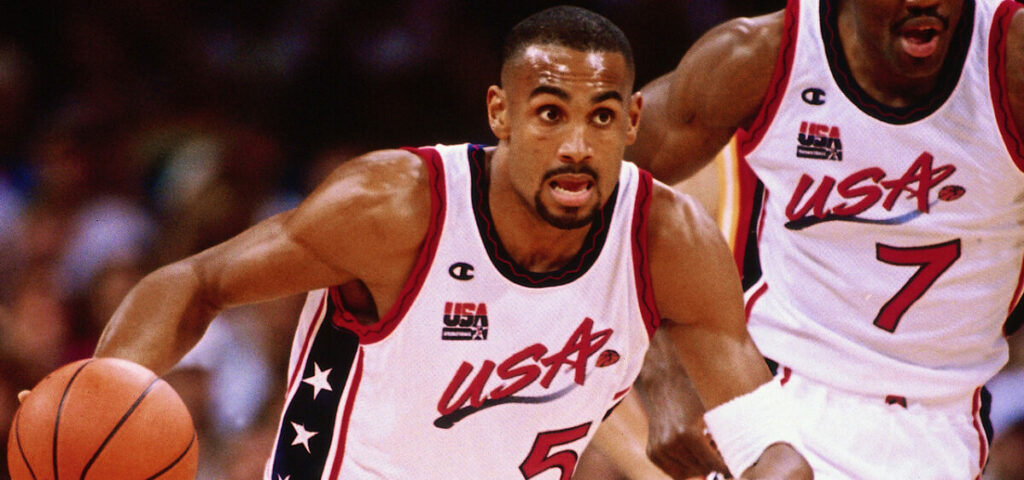
He was chosen to play against NBA All-Stars as a member of the 1992 Olympic Development team, and had put together an exemplary resume on the collegiate level. He was a unanimous choice for First Team All-American in 1994.
Grant Hill – Detroit Pistons
It was clear that the Detroit Pistons were no longer in their “Bad Boys” era during the 1993-1994 campaign. While Joe Dumars, Isiah Thomas and Bill Laimbeer remained on the roster, each of them had seen much better days, and the latter two had started to break down. It was difficult for those players and the franchise to admit, but it was better for everyone if the team rebuilt the core of the roster.
They finished 20-64 that year, and were squarely in the hunt to select first in the 1994 NBA Draft. The Milwaukee Bucks and Dallas Mavericks ended up claiming the top two spots, but Grant Hill fell to third behind Glenn Robinson and Jason Kidd. Detroit was thrilled to end up with a proven winner who could impact the game in many different ways.
While the Pistons and their younger core still struggled relative to the rest of the league in 1994-1995, Hill’s immediate contributions were a beacon of hope for the franchise. He averaged nearly 20 points per game, with over six rebounds and five assists per contest. Grant Hill was on the 1994-1995 NBA All-Rookie Team, and was selected as the league’s Rookie Of The Year along with Jason Kidd. He also made the NBA All-Star game in his first professional campaign.
As arguably the pre-eminent point forward in the game, Grant Hill would do things most players could only dream of. Before LeBron James, Russell Westbrook and others popularized the allure of a triple double, Hill was logging them routinely in the late 1990’s. His career 29 triple doubles for the Pistons is nearly six times higher than the next closest player (Isiah Thomas with five).
Even with his prodigious production, Hill led the Pistons only to the first round of the playoffs during his first six years in the NBA. With a certain mega contract awaiting him, Hill had his best scoring season in 1999-2000, averaging over 25 points a game. It would be very interesting to see what his future would hold, and where he would realize his potential.
Grant Hill – Orlando Magic
There was an incredible amount of speculation during the summer of 2000 as to where Grant Hill would end up. It seemed like he wanted to be part of a situation where he could advance deeper into the playoffs than he had with the Pistons.
With that, and $92 million on his mind, Grant Hill signed with the Orlando Magic. The franchise had also acquired promising young star Tracy McGrady that summer as well, and figured to be a factor in the Eastern Conference for many years to come.
There was only one problem. Hill suffered an ankle injury at the end of the 2000 regular season that sidelined him for most of Detroit’s first round series. Being the competitor that he was, Hill played in two games of that playoff run, but was clearly not himself.
That ankle injury proved to be incredibly serious, and would end up derailing his NBA career. Things never did get off the ground for Hill in Orlando, who only played 47 games in his first four seasons with the Magic. He would end up having five surgeries in three years to try to get himself back to All-Star form, and ended up dealing with an infection that nearly cost him his life.
At long last, Hill would finally make it back to the Magic as a contributing NBA player in the 2004-2005 campaign. Unfortunately by that time, McGrady had been traded to the Houston Rockets, but it was important for Hill to show Orlando fans and the league as whole he could still play. He appeared in 67 games, while averaging just under 20 points per game that year.
As a 34 year-old, Hill would have one final productive season for the Magic, playing over 30 minutes a night in 65 games.
Grant Hill – Phoenix Suns
Even though his story was inspirational, the Orlando Magic decided to move in a different direction with Hill after his contract ended. Grant Hill was now in his mid thirties, and was no longer going to be the dynamic player who could carry a team on his shoulders. He would need to play in a situation where the hierarchy was already established, and where he could come in and play a role.
Hill joined the Phoenix Suns, who seemed like a strange fit at the time. Even though they weren’t speeding up and down the court as fast as they were in the mid 2000’s, the team still wanted to push the pace. Hill’s surgically repaired ankle would be in for a true test playing for his new team.
However, with one of the league’s most renowned training staffs, and the confidence of general manager Steve Kerr, Hill’s ability and availability were present from day one. He would average between 10 and 13 points per game during his five seasons with the Suns, and expanded his game based on what the team needed. He would become an improved three point shooter to help space the floor, and play defense on some of the tougher wings Phoenix would face in the Western Conference.
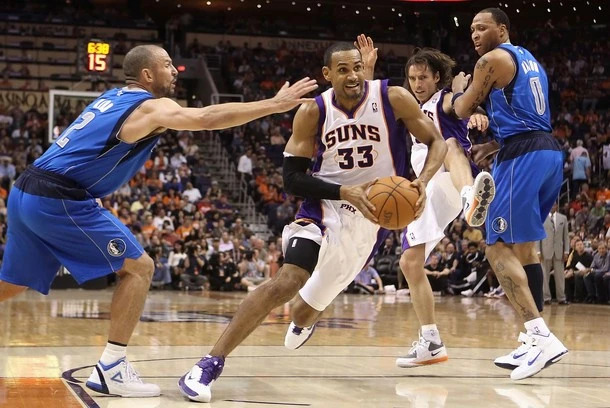
The 2009-2010 Suns went toe to toe with the Los Angeles Lakers but ultimately fell in the Western Conference Finals in six games. Hill’s outside shooting, and team-first attitude were on full display at age 37, as he posted games with three blocks or three steals in the Conference Finals. He also scored 23 points in Game 2 of that series.
The Suns weren’t able to recapture that glory during the next two seasons, but Hill got to play solid minutes for a team in transition. In some ways, his last couple of years in Phoenix could be thought of as make up seasons for the time he lost during the early part of his stint with Orlando.
Grant Hill – Los Angeles Clippers
At age 40, the end was near after Grant Hill’s time in Phoenix came to a close. He signed with the Los Angeles Clippers in 2012-2013, in what would be his final NBA season. He spent a lot of time on the bench for a Clippers team that was eventually knocked out in the first round of the Western Conference playoffs by the Memphis Grizzlies.
What does Grant Hill do for a living?
Grant Hill’s career on the court came to an end several years ago, but he still remains an integral part of the lives of basketball fans. He has had a successful second career in the media with Turner Sports and NBATV. Hill can often be found providing valuable analysis on a postgame show on NBATV in the studio.
Hill is also one of the highest regarded in-game analysts in the league today. He has been assigned to meaningful playoff games, including the Conference Finals in recent seasons. Additionally, as one of the greatest college players of our generation, Hill has become a fixture on CBS’ coverage of the NCAA Tournament. He has called the National Championship game alongside Jim Nantz for the last several years.
In the last couple of years, there has been a debate as to whether Grant Hill’s number should be retired by the Detroit Pistons. It will be fascinating to see whether the organization decides to put his number in the rafters.
Why did Grant Hill stop playing basketball?
He played 19 seasons in the NBA and during his career he was riddled with injuries and health problems which contributed to his retirement. Nonetheless, he is still very active in the NBA community.
Who played with Grant Hill at Duke?
Christian Laettner, with whom Grant Hill played at Duke, won two college NBA titles.
Is Grant Hill a Hall of Famer?
While he never did quite reach that level of success, Hill managed to have one of the most interesting careers in recent NBA history. Many players would have decided to call it a career if they faced the obstacles that Hill did. His commitment to the game he loved, and his impact to basketball in the modern era cannot be denied. To that end, he was inducted into the Naismith Memorial Basketball Hall of Fame in the Class of 2018, cementing his place in league history.


