
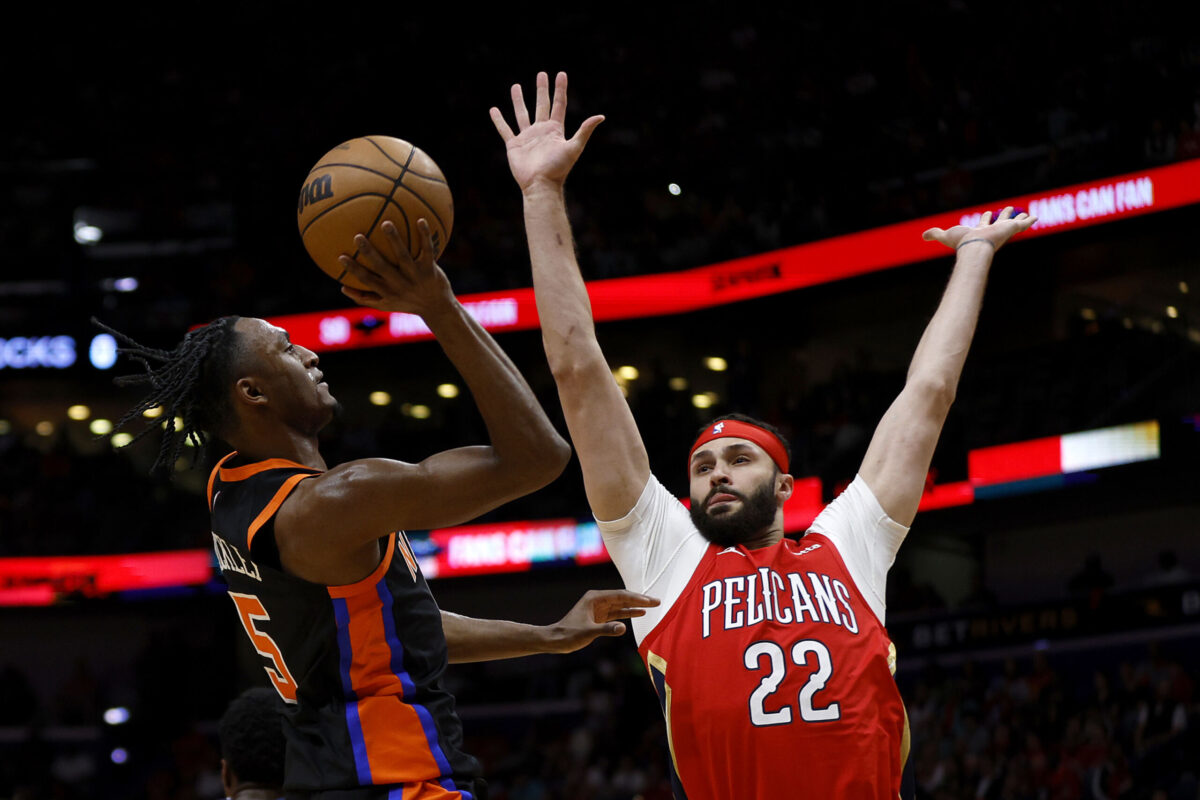
In the world of basketball, a crucial statistic that measures a player’s shooting efficiency is the field goal percentage. But what is it, and why is it so important? In this blog post, we’ll dive into the intricacies of field goal percentage, its impact on player and team success, and how it compares across different basketball leagues, including answering the question: what is the average field goal percentage in the league? So let’s lace up our sneakers and get ready to explore the fascinating world of field goal percentage!
Understanding Field Goal Percentage
Field goals made are measured relative to field goals attempted. The ratio of this is known as field goal percentage. It’s a crucial metric in basketball, as it tells us how well a player or team is shooting the ball during the game. But how exactly is it calculated? Simple, you just divide the number of made shots by the total shots attempted, and voila! You get the field goal percentage.
But what about the three-pointers? How do they affect the field goal percentage? That’s where effective field goal percentage (eFG%) comes in. eFG% takes into account the extra value of a made three-pointer, which is worth one and a half times more than a made two-pointer. This metric gives a more accurate measure of a player’s shooting performance and shot attempts, as it factors in the value of three-point shots.
Interestingly, some players tend to have better field goal percentages than others. Centers, like Rudy Gobert, typically have a higher FG% because they can easily get close to the hoop and make a lot of layups and dunks. So, the player’s position on the court plays a significant role in their field goal percentage.
Analyzing NBA’s Average Field Goal Percentage
The current average field goal percentage in the NBA hovers around 46%. But how do different player positions and the rise of three-point shooting affect this number?
Let’s dive deeper into these factors and their impact on the NBA’s average field goal percentage.
Guards vs. Forwards vs. Centers
As mentioned earlier, guards typically have a lower FG% compared to forwards and centers. This is mainly because of their position on the court and shot selection, as guards often take shots from farther away or more challenging angles. On the other hand, forwards and centers usually have higher field goal percentages due to their proximity to the basket, which allows them to make more layups and dunks.
This difference in FG% among player positions can be further exemplified by comparing college basketball eFG% data. In the 2012/13 season, Howard, a guard, had an eFG% of 39.2%, while Creighton, a forward, boasted an impressive eFG% of 58.2%. So, it’s evident that a player’s position significantly influences their field goal percentage.
Impact of Three-Point Shooting
With the rise in three-point field goal accuracy, the overall average field goal percentage in the league has experienced a substantial increase. Players who switch from mid-range shots to three-pointers often see a boost in their effective field goal percentage, as the extra value of a made three-pointer is taken into account.
There’s also a correlation between three-point shooting success and team success in certain time periods. A higher three-point shooting accuracy not only contributes to a higher overall field goal percentage, but also adds more points to the scoreboard, increasing the chances of winning games and achieving team success.
Factors Influencing Field Goal Percentage
Several factors can impact a player’s field goal percentage. One such factor is shot selection. If a player takes shots from further away or from more challenging angles, their field goal percentage will be lower than someone who takes shots closer to the basket or from simpler angles. So, it’s crucial for players to be mindful of their shot selection to improve their field goal percentage.
Another factor affecting field goal percentage are offensive schemes. Players in an offense that encourages taking shots from farther away or more difficult angles will have a lower field goal percentage compared to those in an offense that emphasizes taking shots closer to the basket or from easier angles.
Lastly, individual skill level plays a significant role in field goal percentage. Players with better shooting techniques, ball-handling skills, and decision-making abilities will tend to have a higher field goal percentage than those who lack these skills. Therefore, it’s essential for players to continuously work on improving their skills to boost their field goal percentage.
Notable NBA Players and Their Field Goal Percentages
Some NBA players have achieved exceptional field goal percentages, such as:
- Rudy Gobert
- DeAndre Jordan
- Montrezl Harrell
- Hassan Whiteside
- Clint Capela
- Artis Gilmore
All of these players boast a field goal percentage over 60%. But what makes these players stand out? Let’s take a closer look at their shooting styles and contributions to their teams.
DeAndre Jordan, a center known for finishing around the rim, has knocked down 3,680 field goals in his career and is a former NBA champion. Clint Capela, a center who excels in finishing around the rim and rim protection, has contributed to the Atlanta Hawks with 3,680 field goals in his career.
Hassan Whiteside, another rim finisher and protector, has been a key player for the teams he’s played for, with 3,680 field goals in his career. Artis Gilmore, a center with a great ability to finish around the rim and protect the rim, has put up 3,680 field goals in his career and is a former NBA champion.

These players’ remarkable field goal percentages can be attributed to their shooting styles, focusing on finishing around the rim and protecting the basket. Their success highlights the importance of shot selection and skills in achieving high field goal percentages.
How Field Goal Percentage Relates to Team Success
Field goal percentage is a strong indicator of team success. Teams with higher field goal percentages tend to score more points, have more wins, and make more playoff appearances. So, it’s clear that a high field goal percentage can significantly contribute to a team’s overall performance, including playoff appearances and championship wins.
To achieve a higher field goal percentage, teams can focus on shooting accuracy, shot selection, and offensive execution. By honing these aspects, teams can increase their field goal percentage, which in turn, translates to more points on the scoreboard and ultimately, more wins.
So, the bottom line is that a high field goal percentage can make or break a team’s success. Teams that master shooting accuracy, shot selection, and offensive execution have a better chance of succeeding in the competitive world of basketball.
Strategies for Improving Field Goal Percentage
To improve your field goal percentage, you can try various strategies, such as:
- Increasing your shot count
- Practicing quality shots
- Using a colored basketball for practice
- Focusing on the rim earlier in your shooting motion
- Doing “All Net” shots to increase accuracy
- Working on your ball pick-up
- Using visualization techniques to enhance your shooting performance
- Filming yourself shooting to identify areas for improvement
Another crucial aspect to consider is the combination of quantity and quality in your shooting practice. By practicing different types of shots, you can become more accurate, boosting your chances of making more shots and improving your field goal percentage.
Furthermore, using a colored basketball in practice can help you fine-tune the accuracy of your shot, leading to higher field goal percentages. Remember, practice makes perfect! So, keep working on your shooting skills and implementing these strategies to elevate your field goal percentage.
Comparing NBA Field Goal Percentage to Other Basketball Leagues
Comparatively, the NBA’s average field goal percentage of 45.2% is higher than the average field goal percentage in college basketball and international leagues. But what could be the possible reasons for this difference?
One possible explanation for the variation in field goal percentages during a single season is the different rules and regulations in various basketball leagues. The NBA follows a distinct set of rules that may contribute to higher field goal percentages compared to college basketball and international leagues.
Another factor could be the level of competition and coaching in the NBA. The NBA attracts top talent from around the world, and the coaching staff is highly skilled, leading to better shooting techniques and offensive schemes. Consequently, the NBA’s field goal percentage is higher compared to other basketball leagues.
Summary
In conclusion, field goal percentage is a vital statistic in basketball that measures a player’s shooting efficiency. It varies across player positions and is influenced by factors such as shot selection, offensive schemes, and individual skill level. Field goal percentage is also a strong indicator of team success, as higher percentages usually lead to more wins, playoff appearances, and championships.
To improve your field goal percentage, focus on a combination of quantity and quality in your shooting practice, implement various strategies, and learn from the best players in the NBA. Remember, a high field goal percentage can make all the difference in the exciting world of basketball.
Frequently Asked Questions
What is the average field-goal percentage for NBA players?
The average field goal percentage for NBA players is usually between 44% and 46%.
What is a good effective field goal percentage in the NBA?
An effective field goal percentage of 60% or higher is considered respectable in the NBA, and anything below 50% is generally viewed as subpar. For example, Julius Randle was last in the league last year with an eFG% of 45.9%.
What is the average 3P% in the NBA?
The average 3-point percentage (3P%) in the NBA is approximately 35-36%. This percentage has steadily increased since the introduction of the three-point shot in the NBA, from a low 28%. Generally, a good 3P% in the NBA is anything over 35%, with an elite percentage over 40%.
Sources
1. teamrankings.com – NBA Basketball Player Stats – Field Goal Percentage
2. wikipedia.org – Field goal percentage
3. sportsbrief.com – Ranked! A list of NBA players with the best field goal percentage
4. statmuse.com – NBA League Average Field Goal Percentage By Position
5. blog.gitnux.com – The Most Surprising NBA Shooting Statistics And Trends in 2023


