
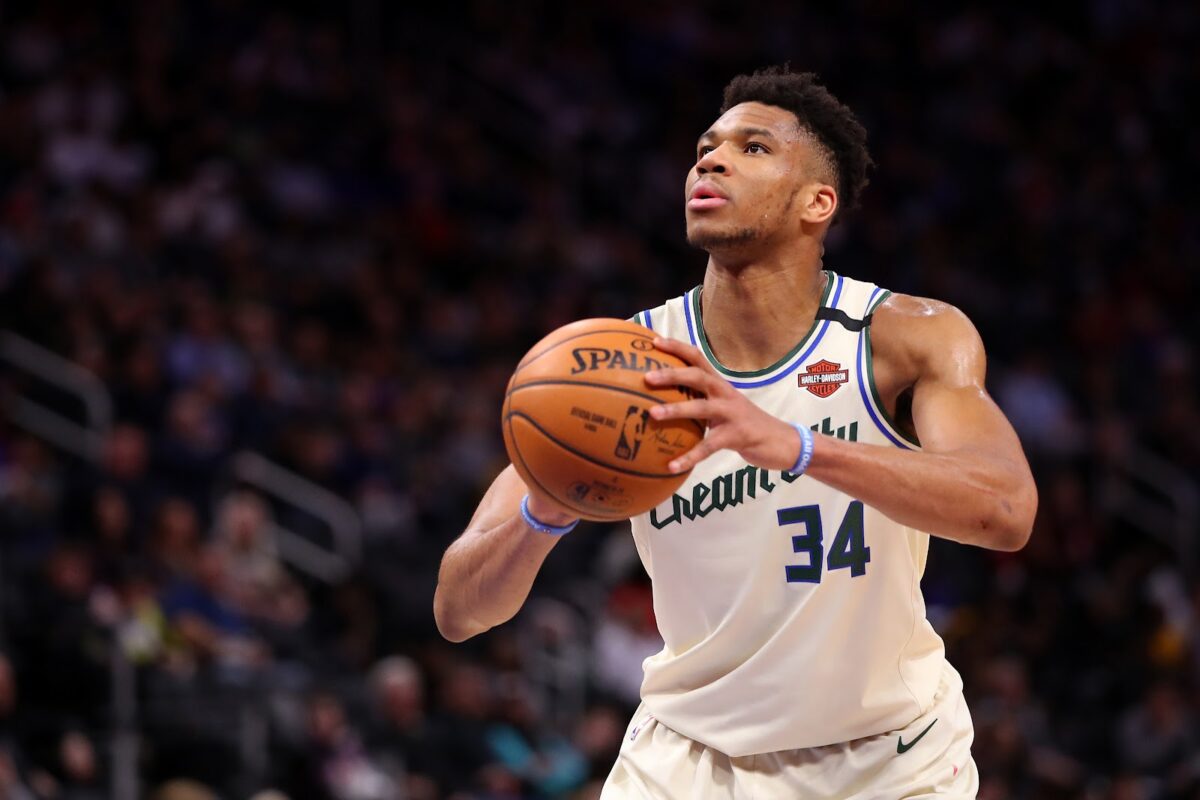
There are many complicated rules in the National Basketball Association, all of them made to make the game more interesting and entertaining to watch. This one is quite simple to understand even by people not particularly interested in basketball.
Free throws are awarded for players by the referees as a result of a personal foul. You are punched or someone makes you fall over? You get a free throw!
After a successful free throw, the shooting team is awarded one point. A team can be awarded more than one free throw. The free throws are made after the period is over in a bonus time.
Free Throw Line
The referee gives the ball to the free-throw shooter. When a player is awarded the ball, he makes his way to the free-throw line. The free-throw shooter is forbidden to cross the free-throw line until the ball has touched the basket ring, backboard, or throw ends. If the shooter does so and the attempt is successful, no point is scored anyway.
Hash Marks
The rest of the players are situated at the hash marks near the key or they stay in the offense’s backcourt. The spots nearest to the end line are reserved for the opponents of the free-throw shooter. Only one of the third spaces may be utilized by an adversary of the free-throw shooter but it’s not mandatory, the spaces can remain vacant and his teammates cannot take them.
(1997) Tie game in game 1 of the NBA Finals with Karl Malone at the line. Scottie Pippen goes up to him and whispers, "Mailman doesn't deliver on Sundays."
— Timeless Sports (@timelesssports_) July 25, 2019
Malone misses both free throws and Jordan hits a buzzer beater the very next possession. Legendary. ? pic.twitter.com/ZkCx2LnP5m
In addition, players must be still in those places, they cannot reach over or extend themselves in any way that will make them touch the lane line or the floor inside the line. They cannot block the way for the free-throw shooter. They must keep their lane space no more than 3 feet from the lane line before the ball is released. The official must not permit players who are not in their lane spaces to approach the three-point line above the free throw line extended or to touch the line or floor inside the line when the ball is thrown.
None of the players can interfere with the free-throw shooter or distract him in any way. They cannot enter the lane, they can’t move in any sudden manner, they can’t wave their hands or talk to the shooter or other players. It’s uncommon in other sports, where players tease themselves to deconcentrate each other. In NBA basketball it’s completely unacceptable.
Rules Concerning Free Throw Attempt
The attempt has to take place in 10 seconds after getting the ball from the referee. The goal is to score a point and the player shouldn’t miss the free throw attempt or fake it on purpose. The ball should at least touch the rim.
No player except the free point shooter can touch the ball until it goes through the rim or touches the backboard. The ball cannot be interfered with when it’s above the rim or is balancing on the rim.
When the shot is missed and it was the last free throw attempt, the ball becomes alive and the game is in play.
What is a free throw violation?
Welcome to the NBA of the 80s. That’s two free throws and not one more, snowflake. pic.twitter.com/NQcCzCthFA
— Super 70s Sports (@Super70sSports) February 21, 2020
If a foul is committed while the free throw attempt is in play, the other team inbounds the ball at the free-throw line extended. If two teams violate any of the rules mentioned above, during the free-throw attempt, the discrepancy is resolved by a jump ball. The jump ball is performed from its traditional place, the midcourt.
When are the free throws awarded?
The free throws are named that way because they are basically free points. They are also called foul shots because they are awarded to a team after their player is fouled.
In most cases, the player who was fouled gets the ball. If the player is injured in another way except for a flagrant foul, the coach of the opposite team can choose one of the players sitting on the opponent’s bench.
If the player is injured because of flagrant foul or another kind of unsportsmanlike conduct; and cannot reenter the game because there is a risk of concussion, the coach of the fouled player chooses the substitute free throw from the players who are already in the game.
If the fouled player is disqualified (for example, as a result of a double foul), his coach chooses a substitute free throw shooter from the bench.
How Many Free Throws Are Awarded?
MJ closed his eyes on free throws not once, but twice… and MADE THEM ? pic.twitter.com/jeWBt80jcw
— NBA (@NBA) May 17, 2020
The number of free throws awarded depends on the place where the foul was committed. If the foul is committed while shooting from behind the three-point line, three free throws are awarded. Analogically, when the shot was made inside the three-point line, two free throws are awarded.
A technical foul is a foul not concerning physical contact between the players. I could be, for example, arguing, swearing, or anything the referees say it’s unsportsmanlike. After a technical foul one free throw is awarded.
Why do NBA Players Not Jump on Free Throws?
NBA players could jump when performing a free throw if they wanted to. No regulation says that it’s forbidden or penalized. The reason why they don’t do it is simple—it’s not very efficient. To jump in such a way that the free-throw line isn’t crossed would require using a lot of unnecessary force. This tactic is nonsensical because of the erratic movement which could result in worse aiming.
Hack-a-Shaq
When Coach Pop called for a strategic "Hack-a-Shaq" … five seconds into the '08-09 season. ?? pic.twitter.com/HJfF7VtAHp
— Shaqtin' a Fool (@shaqtin) August 24, 2019
The awarded free throws can outweigh the outcome of the game. Some of the teams might be tempted to Hack-a-Shaq (foul the worst free-throw shooter on the opposite team in hopes that he will miss the awarded free throw, named after Shaquille O’Neal who is known for being a very bad shooter). This strategy can lead to the fouling team getting the ball faster or having a dominant player out of the game. Obviously, it’s not a very sportsmanlike behavior but this tactic is still used to this day.
The Best Free Throw Shooters
The best free-throw shooters are renowned for their technical skills. On the rankings, we can see names like Steve Nash, Mark Price, or Kobe Bryant. Right now, a free throw leader is Stephen Curry, a Golden State Warriors player, with the biggest free throw shooting percentage.


